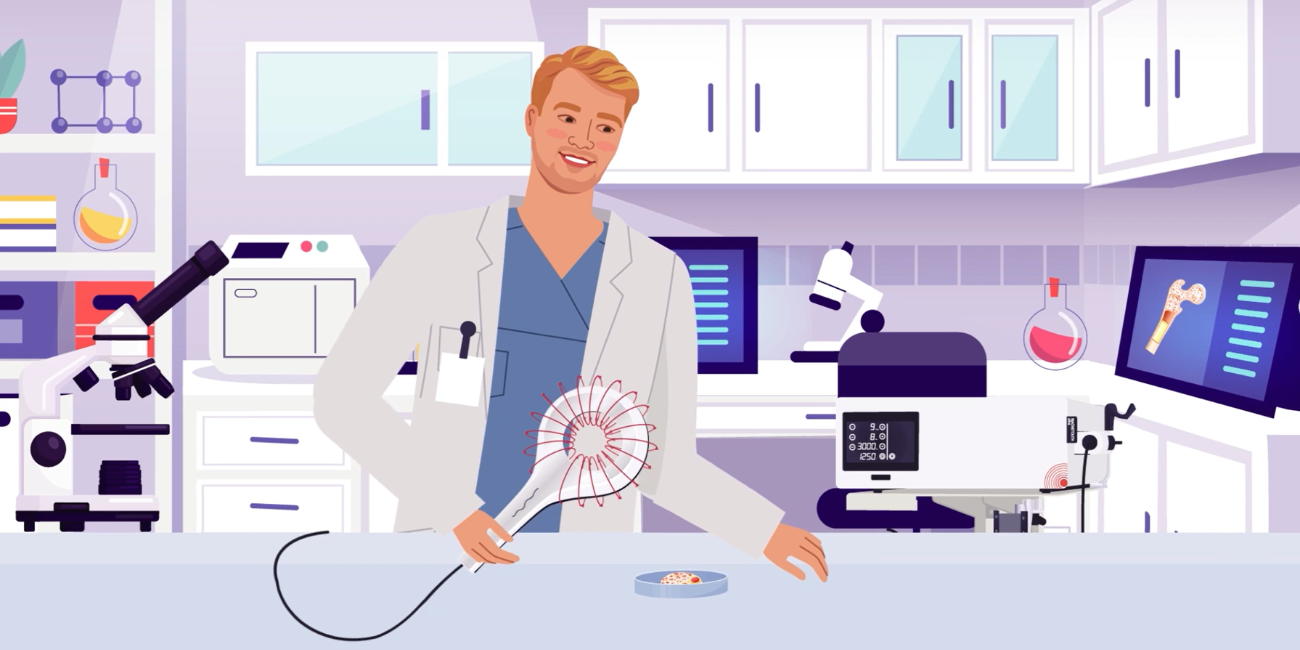
Physical and biological effects of pressure waves
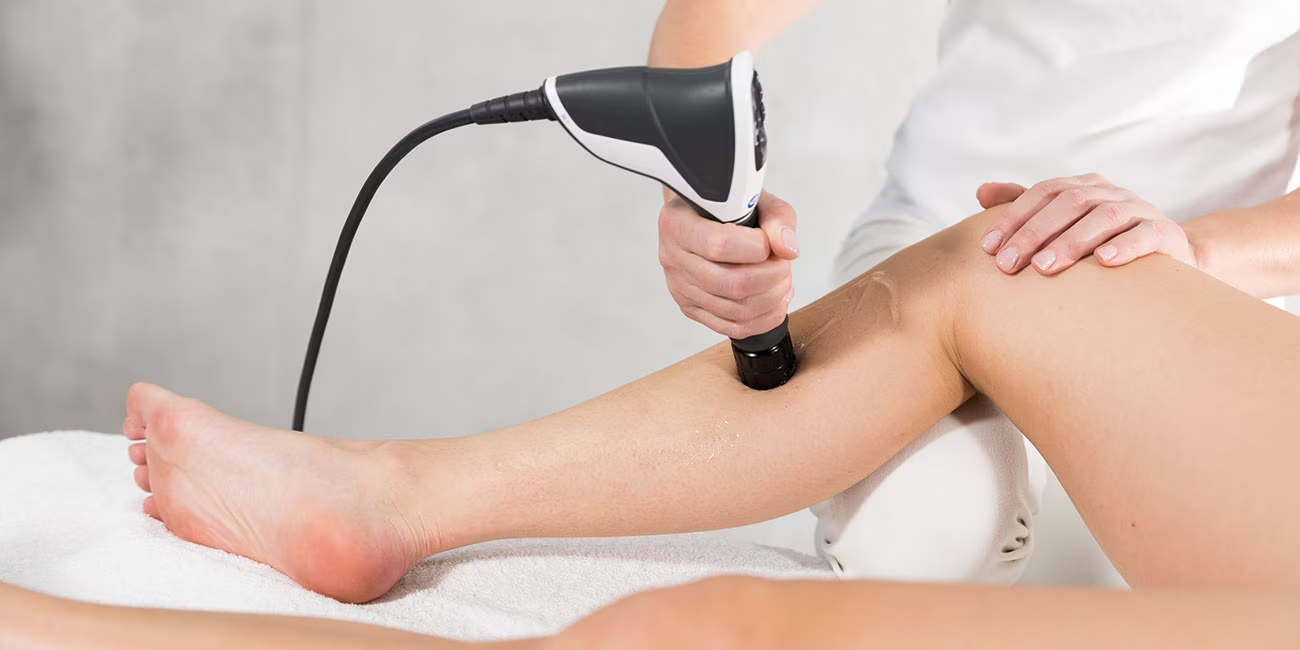
Radial pressure waves generate oscillations in tissue which lead to improved microcirculation and increased metabolic activity.31 Despite the multitude of successful treatment outcomes, hardly any scientific research has been conducted so far to investigate the precise biological effects of radial pressure waves.
Interestingly, despite the physical differences and the resulting different application areas (superficial or deep target areas), the stimulation effects and therapeutic mechanisms seem to present certain similarities. Radial pressure waves are ideal for the treatment of superficial pain, for example. In the therapy of myofascial pain syndromes, radial pressure waves are indispensable for smoothing muscles and/or fascia before or after focused shock wave application.
Similarities in the effects of focused shock waves and radial pressure waves can beexplained in terms of mechanotransduction as the underlying mechanism in both cases. Whereas, when focused shock waves are applied, their short wavelength makes it possible for the effects of the stimulation pulse to be specifically exerted either superficially or at depth, with radial pressure waves this can – since they cannot be focused – be achieved only at the surface, with the effect at depth diminishing radially.
Shock waves vs pressure waves
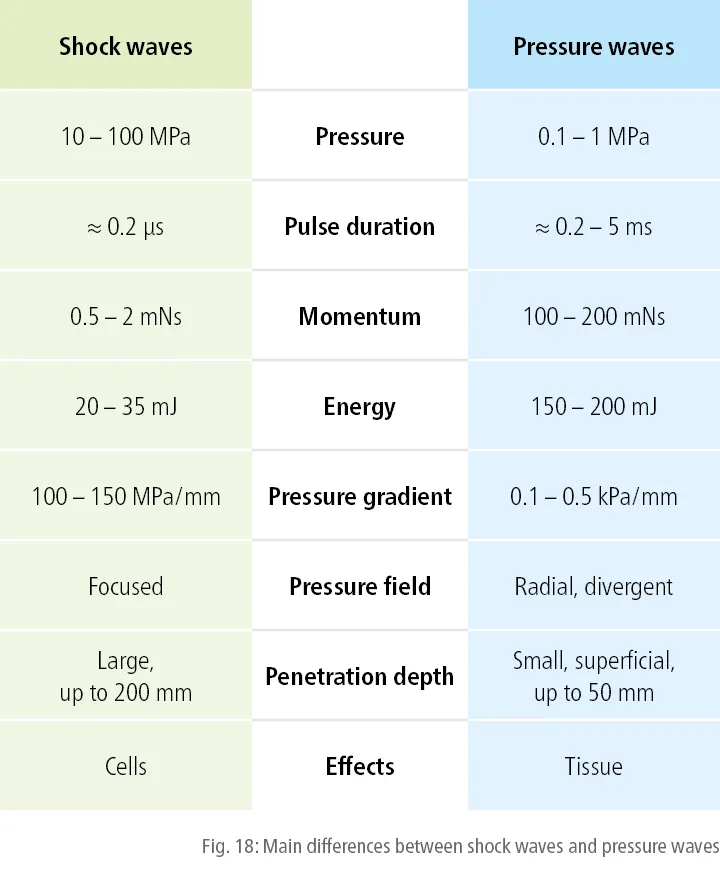
Shock waves and pressure waves differ not only with regard to their physical properties and mode of generation, but also in terms of the magnitude of the standard parameters used and the therapeutic tissue penetration depths achieved. The main differences are summarized in Fig. 18.
Local painful spots, chronic enthesopathies and deep trigger points should be treated with focused shock waves.32
1 Wess, O.: Physikalische Grundlagen der extrakorporalen Stoswellentherapie. Journal für Mineralstoffwechsel, 11(4), 7 – 18, 2004.
2 Chaussy, C. et al.: Extracorporeally induced destruction of kidney stones by shock waves. The Lancet, 316(8207), 1265 – 1268, 1980.
3 Chaussy, C. et al.: First clinical experiences with extracorporeally induced destruction of kidney stones by shock waves. The Journal of Urology, 127(3), 417 – 420, 1982.
4 Valchanov, V. et al.: High energy shock waves in the treatment of delayed and nonunion of fractures. International Orthopaedics, 15(3), 181 – 184, 1991.
5 Schaden, W. et al.: Extracorporeal shock wave therapy (ESWT) in 37 patients with non-union or delayed osseous union in diaphyseal fractures. In: Chaussy, C. et al. (eds.): High Energy Shock Waves in Medicine, Georg Thieme Verlag, Stuttgart, 1997.
6 Dahmen, G. P. et al.: Die Extrakorporale Stosswellentherapie in der Orthopädie – Empfehlungen zu Indikationen und Techniken. In: Chaussy, C. et al. (eds.): Die Stosswelle – Forschung und Klinik. Attempto Verlag, Tübingen, 1995.
7 Wess, O.: Physics and technology of shock wave and pressure wave therapy. ISMST Newsletter 2(1), 2 – 12, 2006.
8 Wess, O. et al.: Working group technical developments – consensus report. In: Chaussy, C. et al. (eds.): High Energy Shock Waves in Medicine. Georg Thieme Verlag, Stuttgart, 1997.
9 Church, C.: A theoretical study of cavitation generated by an extracorporeal shock wave lithotripter. The Journal of the Acoustical Society of America, 86(1), 215 – 227, 1989.
10 Church, C.: The risk of exposure to diagnostic ultrasound in postnatal subjects. Journal of Ultrasound in Medicine, 27(4), 565 – 592, 2008.
11 Delius, M. et al.: Biological effects of shock waves: in vivo effect of high energy pulses on rabbit bone. Ultrasound in medicine and biology, 21(9), 1219 – 1225, 1995.
12 Forssman, B. et al.: Stosswellen in der Medizin, Medizin in unserer Zeit. 4: 10, 1980.
13 Crum, L. A.: Cavitation on microjets as a contributory mechanism for renal calculi disintegration in ESWL. The Journal of Urology, 140(6), 1587 – 1590, 1988.
14 Coleman, A. J. et al.: Acoustic cavitation generated by an extracorporeal shockwave lithotripter. Ultrasound in medicine and biology, 13(2), 69 – 76, 1987.
15 Byron, C. R. et al.: Effects of radial shock waves on membrane permeability and viability of chondrocytes and structure of articular cartilage in equine cartilage explants. American Journal of Veterinary Research, 66(10), 1757 – 1763, 2005.
16 Kisch, T. et al.: Repetitive shock wave therapy improves muscular microcirculation. Journal of Surgical Research, 201(2), 440 – 445, 2016.
17 Goertz, O. et al.: Short-term effects of extracorporeal shock waves on microcirculation. Journal of Surgical Research, 194(1), 304 – 311, 2015.
18 Maier, M. et al.: Substance P and prostaglandin E2 release after shock wave application to the rabbit femur. Clinical Orthopaedics and Related Research, (406), 237 – 245, 2003.
19 Klonschinski, T. et al.: Application of local anesthesia inhibits effects of low-energy extracorporeal shock wave treatment (ESWT) on nociceptors. Pain Medicine, 12(10), 1532 – 1537, 2011.
20 Nishida, T. et al.: Extracorporeal cardiac shock wave therapy markedly ameliorates ischemia-induced myocardial dysfunction in pigs in vivo. Circulation, 110(19), 3055 – 3061, 2004.
21 Mariotto, S. et al.: Extracorporeal shock waves: From lithotripsy to anti-inflammatory action by NO production. Nitric Oxide, 12(2), 89 – 96, 2005.
22 Horn, C. et al.: The effect of antibacterial acting extracorporeal shockwaves on bacterial cell integrity. Medical Science Monitor, 15(12), 364 – 369, 2009.
23 Chao, Y.-H. et al.: Effects of shock waves on tenocyte proliferation and extracellular matrix metabolism. Ultrasound in medicine and biology, 34(5), 841 – 852, 2008.
24 Christ, Ch. et al.: Improvement in skin elasticity in the treatment of cellulite and connective tissue weakness by means of extracorporeal pulse activation therapy. Aesthetic Surgery Journal, 28(5), 538 – 544, 2008.
25 Gollwitzer, H. et al.: Radial extracorporeal shock wave therapy (rESWT) induces new bone formation in vivo: results of an animal study in rabbits. Ultrasound in medicine and biology, 39(1), 126 – 133, 2013.
26 Schuh, C. M. et al.: In vitro extracorporeal shock wave treatment enhances stemness and preserve multipotency of rat and human adipose-derived stem cells. Cytotherapy, 16(12), 1666 – 1678, 2014.
27 Raabe, O. et al.: Effect of extracorporeal shock wave on proliferation and differentiation of equine adipose tissue-derived mesenchymal stem cells in vitro. American Journal of Stem Cells, 2(1), 62 – 73, 2013.
28 Auersperg, V. et al.: DIGEST-Leitlinien zur Extrakorporalen Stosswellentherapie, www.digest-ev.de, 2012.
29 Cleveland, R. O. et al.: Acoustic field of a ballistic shock wave therapy device. Ultrasound in medicine and biology, 33(8), 1327 – 1335, 2007.
30 Uberle, F. et al.: Ballistic pain therapy devices: measurement of pressure pulse parameters. Biomedical Engineering/ Biomedizinische Technik, 57 (SI-1 Track-H), 700 – 703, 2012.
31 Grecco, M. V. et al.: One-year treatment follow-up of plantar fasciitis: radial shockwaves vs. conventional physiotherapy. Clinics, 68(8),1089 –1095, 2013.
32 Gleitz, M.: Die Bedeutung der Trigger-Stoßwellentherapie in der Behandlung pseudoradikularer Cervicobrachialgien. Abstracts 53. Jahrestagung der Vereinigung Süddeutscher Orthopäden e.V., 2005.
33 Wess, O.: A neural model for chronic pain and pain relief by extracorporeal shock wave treatment. Urological Research, 2008; 36(6), 327 – 334, 2008.
34 Wess, O. et al.: Fragmentation of brittle material by shock wave lithotripsy. Momentum transfer and inertia: a novel view on fragmentation mechanisms. Urolithiasis, 48(2), 137 – 149, 2020.
35 Beisteiner, R. et al.: Transcranial Pulse Stimulation with Ultrasound in Alzheimer’s Disease – A New Navigated Focal Brain Therapy. Advanced Science, 7(3):1902583, 2019. doi: 10.1002/advs.201902583.
36 Reilly, J. M. et al.: Effect of Shockwave Treatment for Management of Upper and Lower Extremity Musculoskeletal Conditions: A Narrative Review. PM&R, 10(12), 1385 – 1403, 2018.
RELATED POSTS
Read the latest from Storz Medical
.webp)
National Future Day 2022: school pupils in Switzerland discover the wide range of career opportunities at STORZ MEDICAL
STORZ MEDICAL at MEDICA 2022: Successful return with NEUROLITH, MAGNETOLITH and new stand concept
Review of 2022 »Big« long-service employee anniversaries at STORZ MEDICAL

EMTT Treatment of Ex-Professional Cyclist Marcel Wüst after Serious Cycling Accident
Basic research: A recent study provides evidence for the benefit of EMTT in healing bone fractures
SWL for large urinary stones: Clinical insights into non-invasive treatment
Spanish football federation signs agreement with STORZ MEDICAL for European football competition
Future Day at STORZ MEDICAL: Six children discover medical technology at STORZ MEDICAL
Order the latest issue of UroNews – The magazine for urologists from STORZ MEDICAL

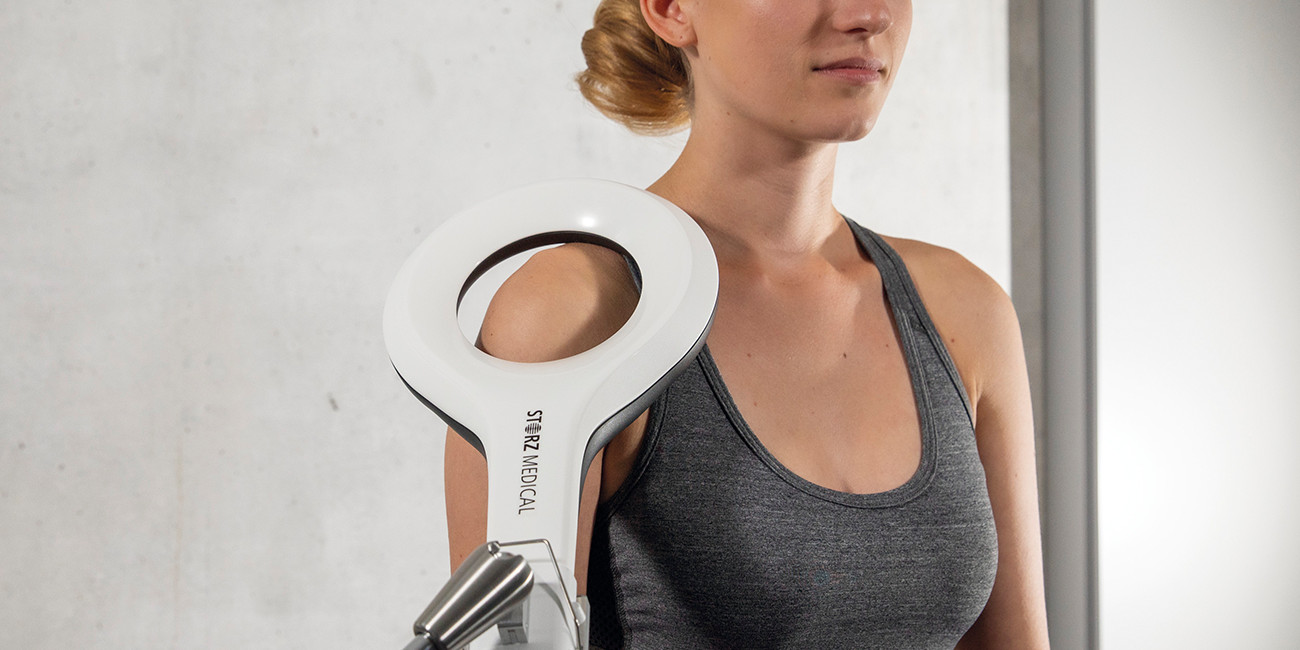
New randomized study: Extracorporeal Magnetotransduction Therapy (EMTT) effective in shoulder joint enthesopathies

Successful topping-out ceremony marks a further milestone for STORZ MEDICAL in Tägerwilen
A field report by the physiotherapists of HSG Konstanz (German 2nd Bundesliga for handball)
Lower limb physiotherapist Benoy Mathew on managing running injuries with shock wave therapy
New case report: Professional volleyball player with acute Achilles tendinitis successfully treated with combined ESWT
Shaping the future of urology: STORZ MEDICAL at the EAU Congress 2024
More space for growth and attractive workplaces: New administration building and warehouse completed
ISMST Congress 2023 in Daegu: Exchange of experience and knowledge


.webp)
Alzheimer’s patient expresses his gratitude with a historic Panneau Japonais
STORZ MEDICAL behind the scenes at the FIS Snowboard, Freestyle and Freeski World Championships 2025

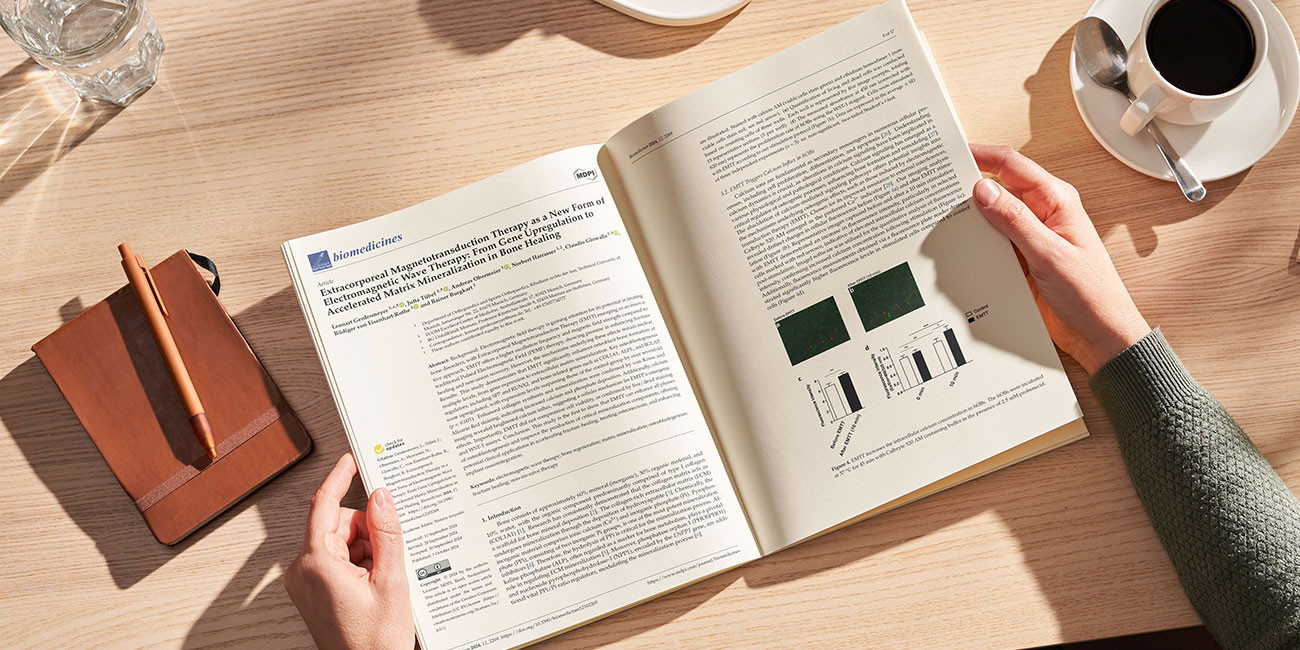
New study demonstrates the positive biological effects of Extracorporeal Magnetotransduction Therapy (EMTT) on human osteoblasts

Welcome to the new »my Storz MEDICAL« portal – your exclusive access to expertise and service
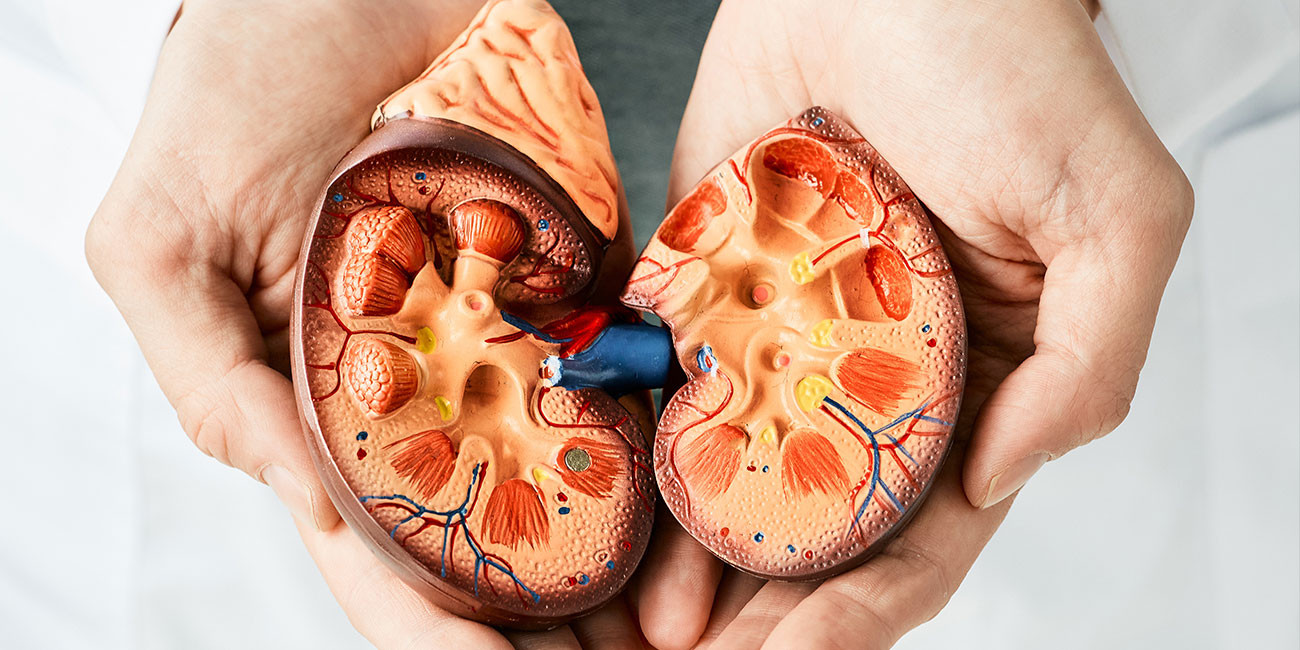
Evidence-Based, Non-Invasive Stone Therapy (SWL) With High Success Rates – MODULITH® SLK »inline«